Introduction
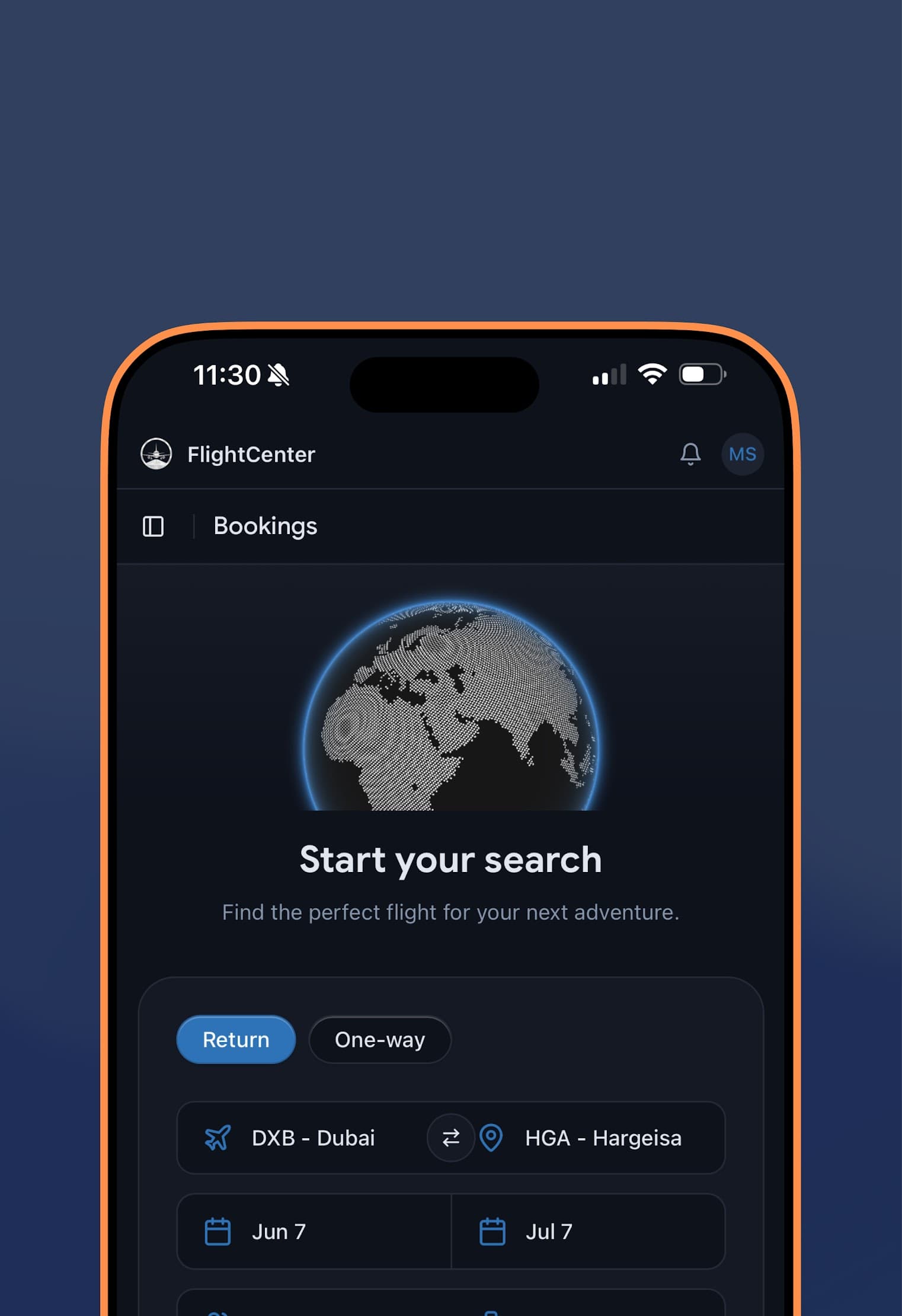
In December 2025, I partnered with Flywhere, a travel agency in Somaliland, to redesign its services for customers who depend on WhatsApp and manual booking.

FlywhereTravel.com operates across two connected systems: a customer-facing website and an internal agent workflow used to manage pricing, destinations, and travel bundles. This project focused on designing a internal platform to manage customer relationships and enable agents to efficiently track, manage and convert customer enquiries into confirmed bookings.
The Problem
After 15 years in business, Flywhere Travel had established a loyal customer base and earned a strong reputation in the market. However, its continued success relied heavily on manual processes that had become increasingly inefficient and unsustainable.


To support continued growth, the company needed to modernise its operations and upgrade its customer care capabilities. Existing manual processes limited responsiveness, reduced efficiency and made it difficult to consistently meet rising customer expectations.
Ticket Issuance Time
Average time from customer enquiry to ticket issuance, causing delays in conversion and customer satisfaction.
Customer Drop-off Rate
Of customers chose not to issue tickets due to slow service, poor communication, or quotes expiring before completion.
Manual Workload
Of agent ticketing tasks 8/10 were manual, search-intensive and inefficient, limiting productivity and slowing response times.
In addition, it became clear that leveraging a self-serve online GDS (Global Distribution System)—widely adopted by global travel agencies was not a viable option for Flywhere at the time. Limited access to digital payment methods in the region, particularly for high-value transactions, created significant barriers to fully online booking.
Customer Relationship Flow
Existing Customer Journey
The current supervisor setup, agent actions, and customer interactions converge into confirmed bookings. Drag the minimap to navigate.
Customer enquire via whatsapp or email
Customer negotiates (WhatsApp/email)
Search for routes (3+ tabs open)
Create manual quote (copy/paste)
Email quote to customer
Manually update booking
Manually accept payment (separate system)
No follow-up reminder → lead goes cold
Customer Accepts & Confirm Reservation
I learned that several challenges within the existing customer journey affected service quality, customer perception and Flywhere’s ability to differentiate in the market:
- Many customers lacked visibility into fair market pricing, which contributed to a race-to-the-bottom pricing strategy and reduced perceived value beyond cost.
- Delays in providing quotes meant customers often approached multiple agencies to compare options, weakening Flywhere’s competitiveness and slowing conversion.
- The current journey offered limited opportunities to add value, educate customers, or build trust, which impacted customer confidence and overall perception of the brand.
These insights highlighted the need to improve speed of service, strengthen customer care and create a more transparent and value-driven experience that would clearly differentiate Flywhere in the market.
Discovery & Design
I spent two full days with leaders and agents at Flywhere conducting interviews, reviewing story maps and identifying opportunities to shape ideal user journeys.
Step 1: Stakeholder Interviews
My goal was to identify friction points, recurring tasks and meaningful customer interactions to develop a stronger understanding of the agent experience.

Step 2: How might we statements
Following the session, I created storyboards exploring two potential routes from enquiry to booking. I then facilitated a “How Might We” exercise to define key opportunity areas, some of which are outlined below.
Storyboarding concepts
- How might we enable flexible, custom pricing for high-demand destinations while maintaining operational control?
- How might we create a single source of truth to improve reporting accuracy and operational visibility?
- How might we provide customers with clear, digital confirmations and proof of purchase to increase trust and reduce manual follow-up?
- How might we support multi-channel customer communication to improve responsiveness and reduce delays?
- How might we design tailored travel packages around high-demand routes to increase efficiency and conversion?
- How might we balance agent-led service with selective self-serve capabilities without overcomplicating the system?
- How might we prioritise high-value destinations to maintain operational focus and service quality?
- How might we design a system that enables shared ownership of customers to reduce operational risk?
The sketches helped us quickly identify the features that would deliver the most value, as well as those that would not be viable within Flywhere’s operating context. The HMW statement, sketches and workshop clarified the system’s practical boundaries and informed the customer journey map that follows.
Step 3: Proposed Customer Journey
This journey map improved both the customer experience and agent efficiency. It also addressed key friction points, including quoting confidence, centralised interactions and management visibility.
Customer Relationship Flow
Multi-Actor Service Journey
How Supervisor setup, Agent actions, and Customer interactions converge into confirmed bookings. Drag the minimap to navigate.
Define Pricing
Set Destinations
Define Bundles
Aggregate GDR Prices
Update Threshold Pricing
Receive Enquiry
Qualify Lead
Consult
Prepare Quote
Start
Discover Flywhere
Browse Packages
Submit Enquiry
Confirm Booking
Issue Tickets
Post-Trip Support
Design Explorations
The goal was to make agent–customer interactions as seamless as possible while reducing cognitive load. I explored a range of real-world scenarios and the following examples highlight key design decisions.
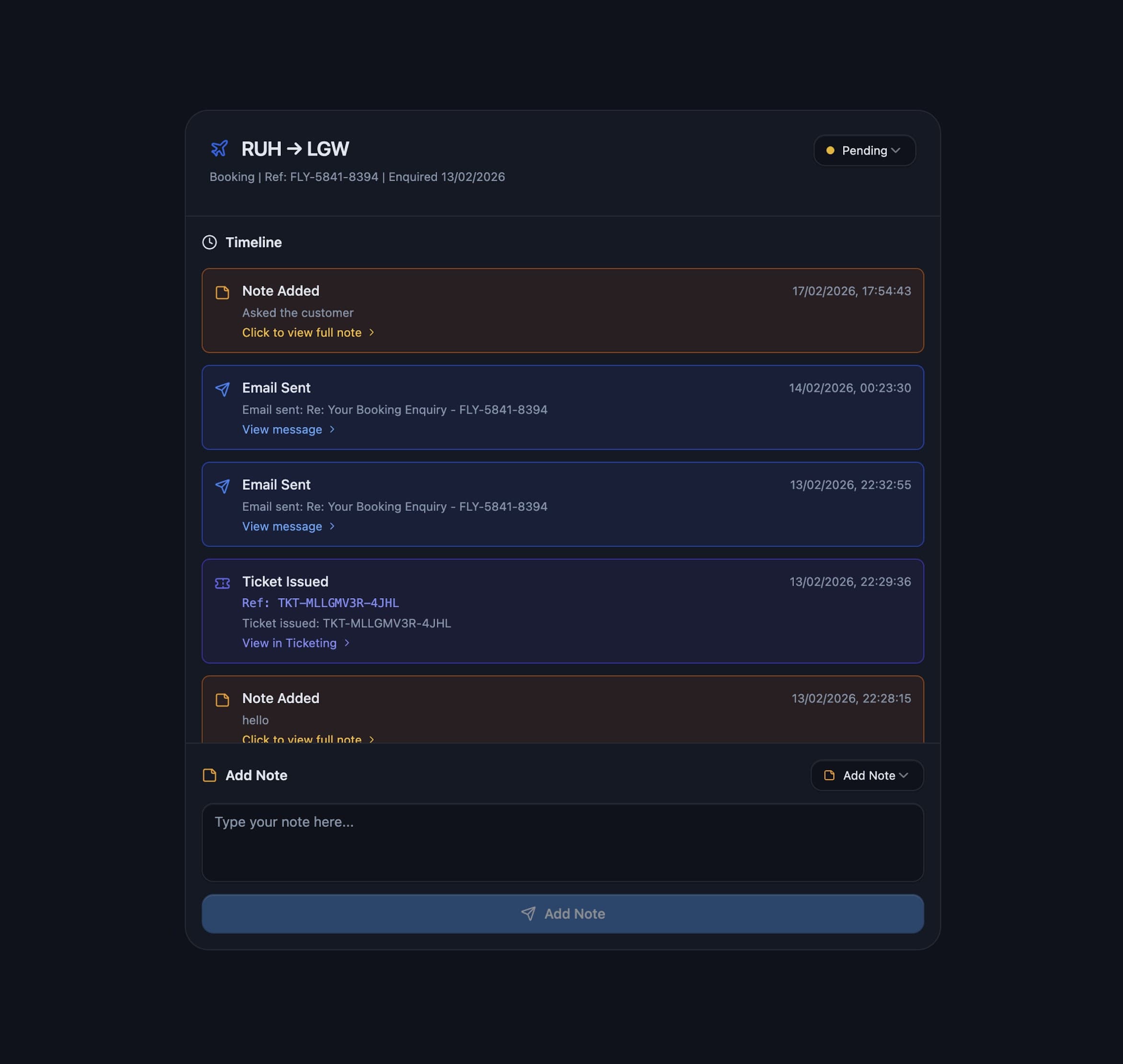
1. The Timeline View
The timeline was designed to provide a clear record of every customer interaction, giving agents full visibility of the buying journey. It consolidates all exchanges and updates in one structured view. After review, the first design proved more effective, offering greater clarity and ease of use within fast-paced workflows.
Visual design
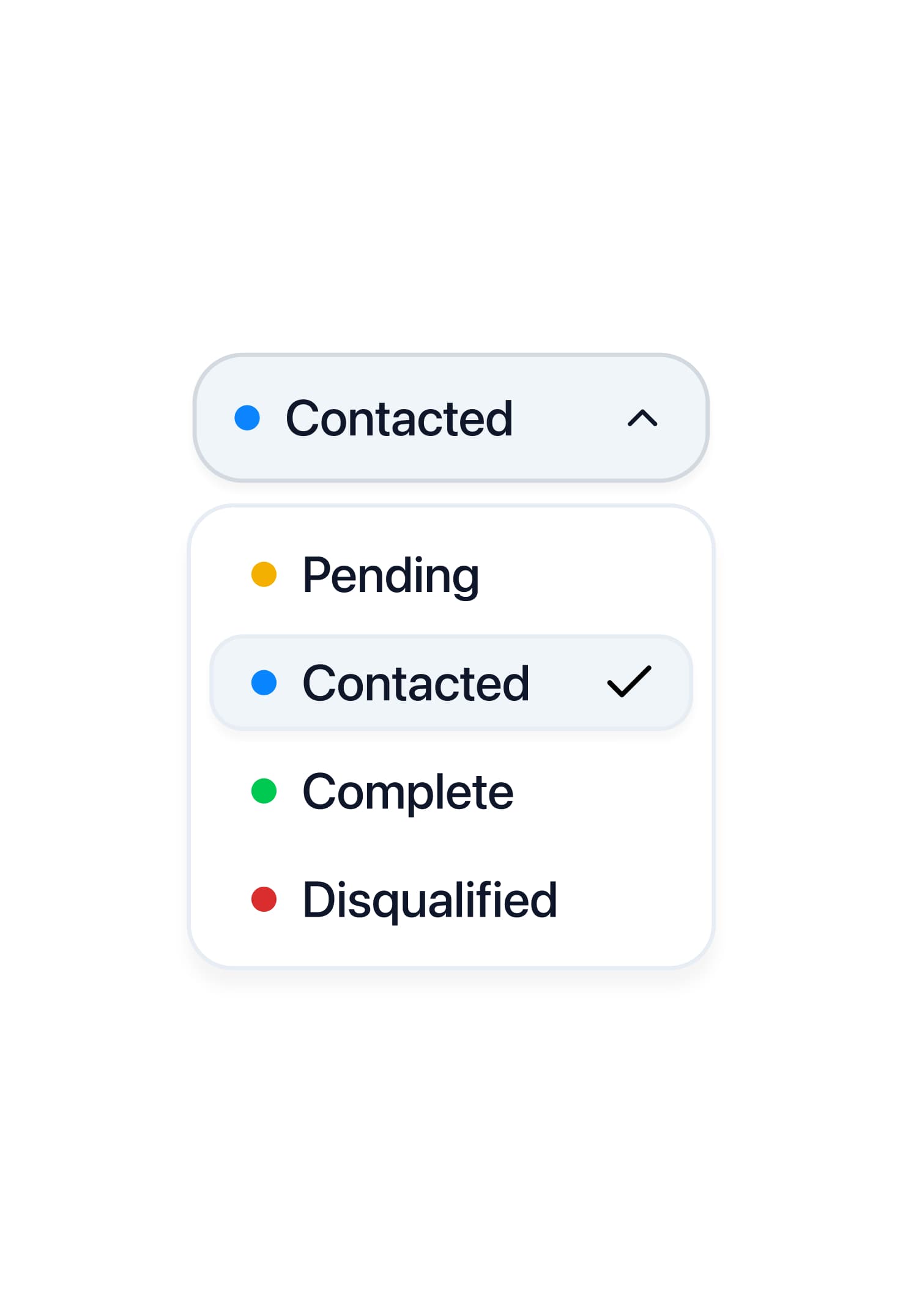
A chronological timeline of emails, notes and status updates, with expandable details for each interaction.
Complete customer context
Centralised interactions in time order, making it faster for agents to understand context and take action
Increased efficiency
Improves efficiency by giving agents a clear, end-to-end view of the customer journey in one place, reducing the need to search across multiple sections.
Visual design
A channel-based structure allowing agents to filter and review emails, notes and tickets independently.
Complete customer context
Enhances clarity and speed by allowing agents to isolate and review specific interaction types.
Increased efficiency
Allowing agents to quickly isolate and access the specific information they need without scanning through unrelated interactions.
2. Pricing Manager
Pricing management is critical to providing instant quotes, as agents and supervisors must research, compare and synthesise multiple options. I designed the interface to simplify this process, improving speed, accuracy and confidence in delivering the best possible outcome for the customer.
Visual design
A route-based pricing view enables teams to focus clearly on origin-to-destination pricing, reducing visual clutter and simplifying comparison.
Visibility
Surfacing destination-specific pricing provides clearer oversight of key routes, making updates and monitoring easier.
Increased efficiency
Centralising route pricing improves update accuracy and accelerates quote generation.
Visual design
A destination-centric pricing view centralises all outbound and inbound routes in one structured interface.
Visibility
Ensures full coverage across connected destinations, reducing the risk of missed pricing gaps.
Increased efficiency
Updating pricing across all connecting routes at once improves consistency, saves time and reduces manual errors.
The Solution
Discovery and exploration revealed that the customer experience was intentionally limited in features and functionality. Customers primarily wanted a simple way to browse flights, understand pricing and contact agents for assistance. These insights reinforced the need to focus on clarity, accessibility and speed.


I delivered a simple interface that enabled agents to:
- Create and manage new enquiries
- Respond to customer requests efficiently
- Generate and send quotes
- Manage and confirm bookings seamlessly


As agents worked primarily on mobile during live interactions, they needed to update dates, pricing and packages quickly and accurately. I designed streamlined, mobile-first forms to enable fast, low-friction updates, as shown in the improvements below.


Final Solution
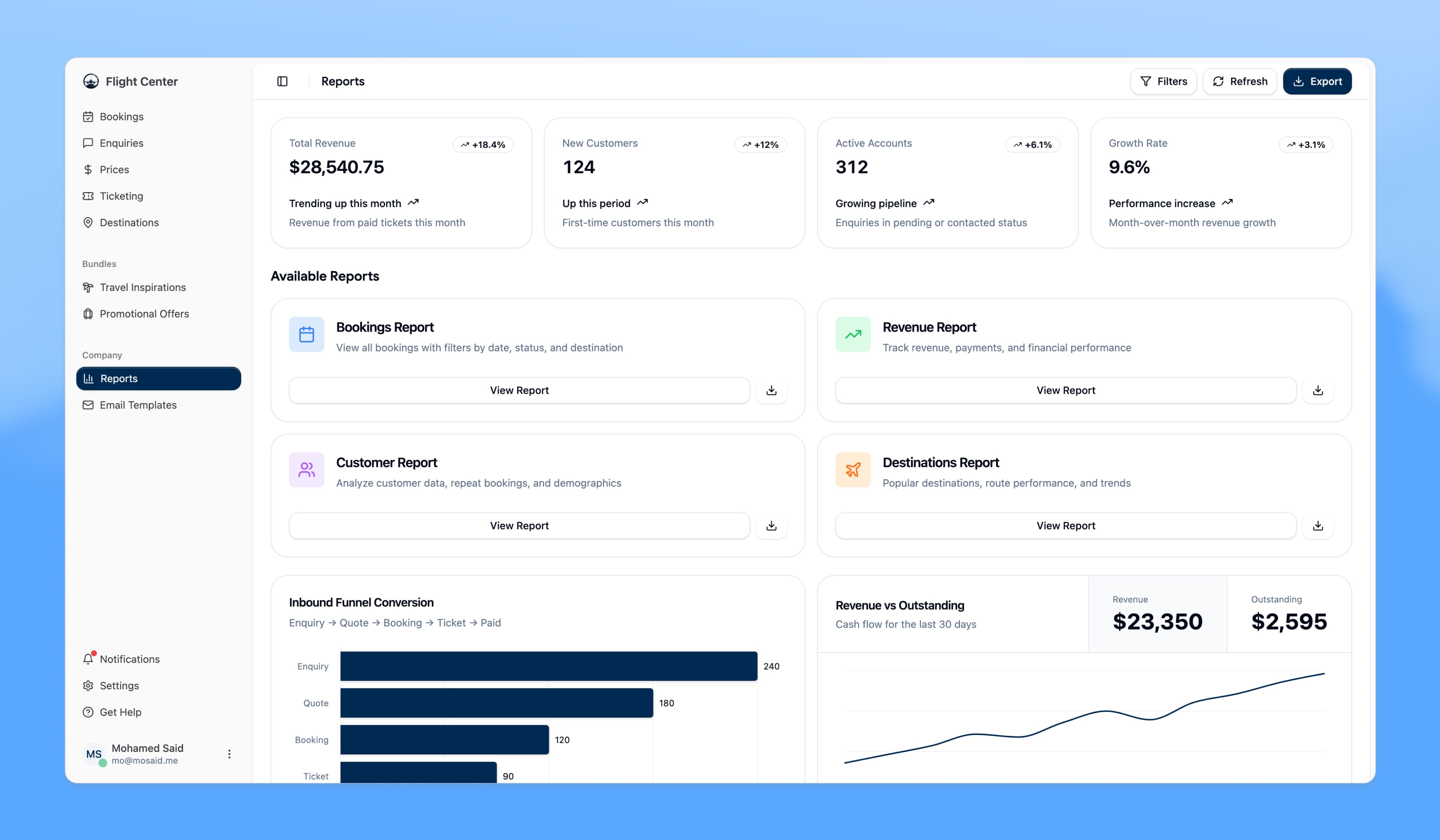
1. Sales Dashboard and Reporting
Supervisors needed visibility into sales performance and agent activity. I designed a dashboard providing real-time sales metrics, productivity data and booking trends, enabling informed data-driven decisions. The page below shows an example of the dashboard.

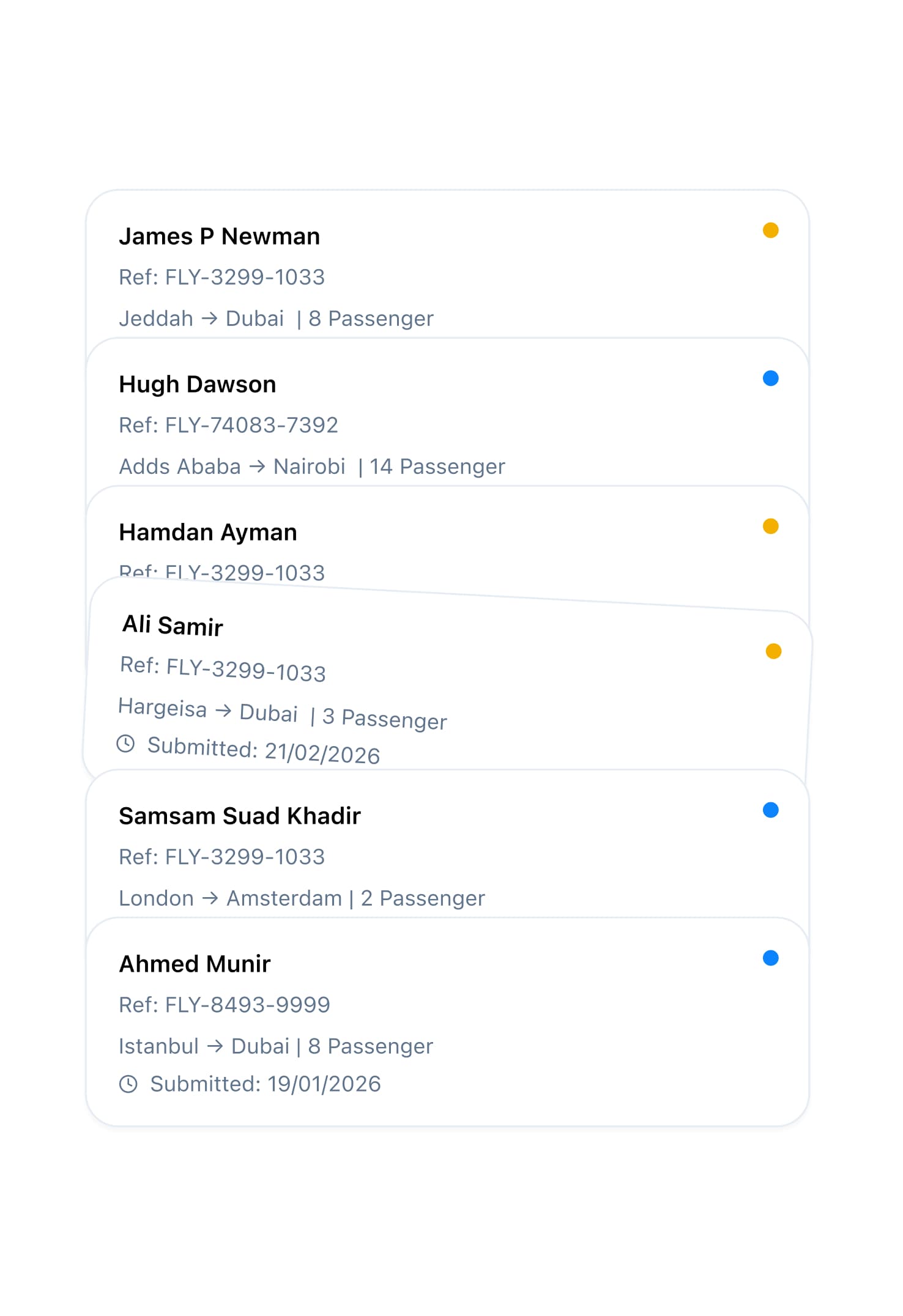
2. Manage Enquiries
All enquiries were managed within a single interface, giving agents a clear overview, enabling quick access and response to customer requests. The page below shows the final design of the enquiries interface.

3. Destinations
The Destination Manager formed the foundation of the destinations offered on flywheretravel.com, ensuring we could not only generate accurate quotes but also deliver a seamless end-to-end experience. The page below shows the final design of the destinations manager.

Key Learnings
Being embedded with Flywhere was a valuable addition to my design journey. The project involved multiple user groups and required balancing business needs with real operational constraints. I took on several roles—thinking strategically as a product lead, facilitating user interviews and applying creative problem-solving as a designer.
This work included:
- Defining a clear and reliable end-to-end user journey
- Conducting domain research, surveys and user interviews
- Identifying key features and setting product priorities
- Creating wireframes, prototypes, high-fidelity designs and iterating based on feedback and testing
What's next?
The project also uncovered several opportunities for future growth that I would be excited to explore:
- Integrate online payments into the ticketing process to streamline transactions
- Expand communication channels, particularly SMS, WhatsApp and Signal, to meet customers where they are
- Apply AI to aggregate and compare pricing from airline and GDS portals, improving speed and accuracy for agents