Introduction
I'm excited to share my experience as the design lead for Pendo’s PLG team. Pendo, an enterprise-focused analytics and discovery platform, aimed to attract and grow SMB and mid-market customers by adding features that helped activate, retain and expand accounts. Our product and design strategy focused on strengthening our PLG flywheel, which included in-product upgrades and a new checkout journey. To drive real business impact, our team quickly launched self-serve onboarding, paywalled modules, and upgrade flows to generate revenue.
Our team of nearly 30, comprised of sales reps, marketers, PMs, engineers and myself as the lead designers. I was responsible for driving discovery, design and delivery of key PLG features, working closely with research and product teams to shape solutions before handing them off to engineering.
Ensure Pendo’s free and starter features are easy to access while providing intuitive pathways to value.
Our Problem
Discovery
The discovery cycle for PLG was short, so I relied heavily on in-product user data and close collaboration with design partners for feedback. Our product and marketing teams continuously ran UI A/B tests to refine and optimise the experience.

Additionally, I used Pendo analytics such as our Paths reports to track user flows and identify opportunities to introduce paywalls, strategically determining where they should appear within the product. In total, I designed and shipped 13 PLG releases.

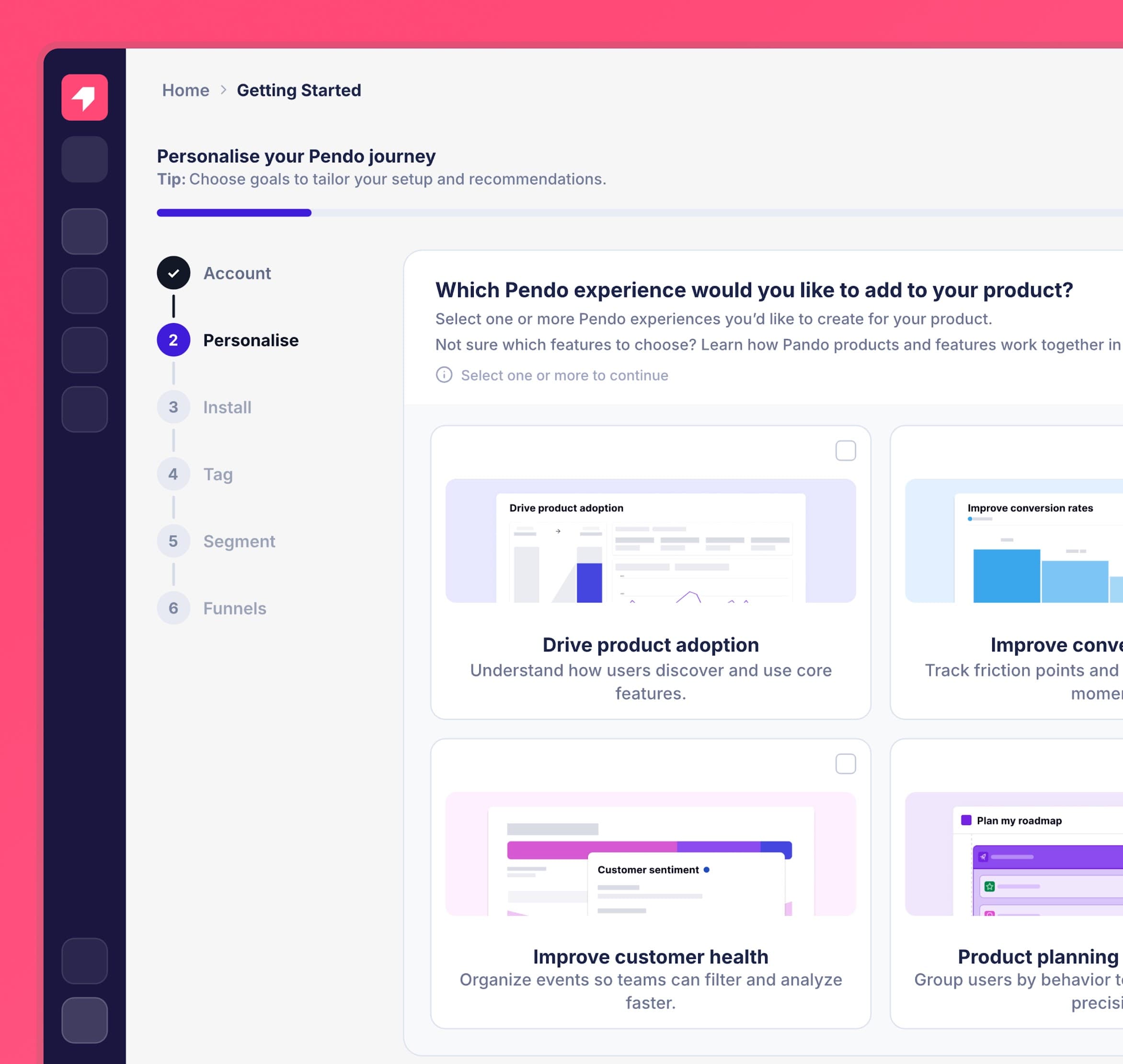
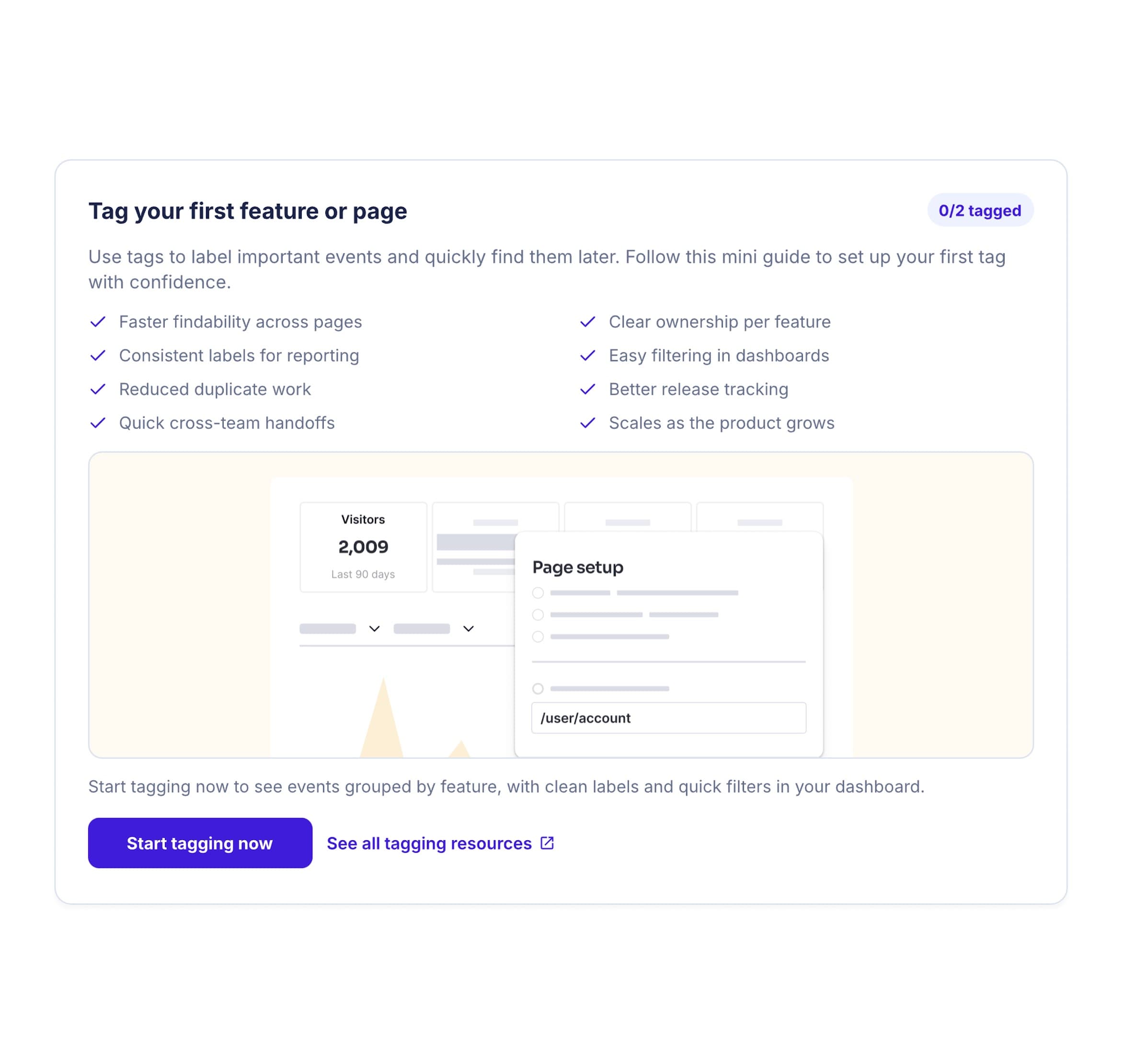
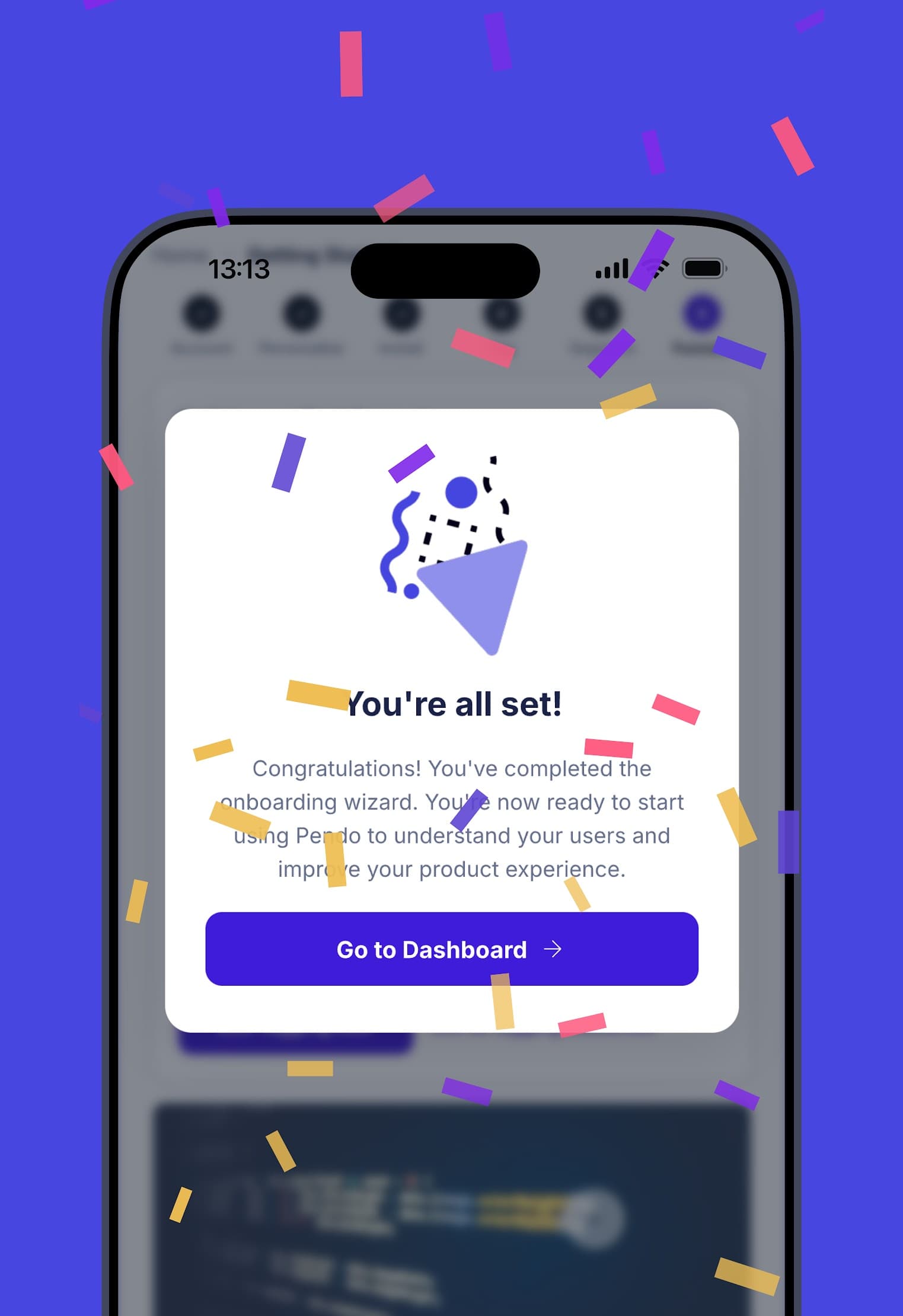
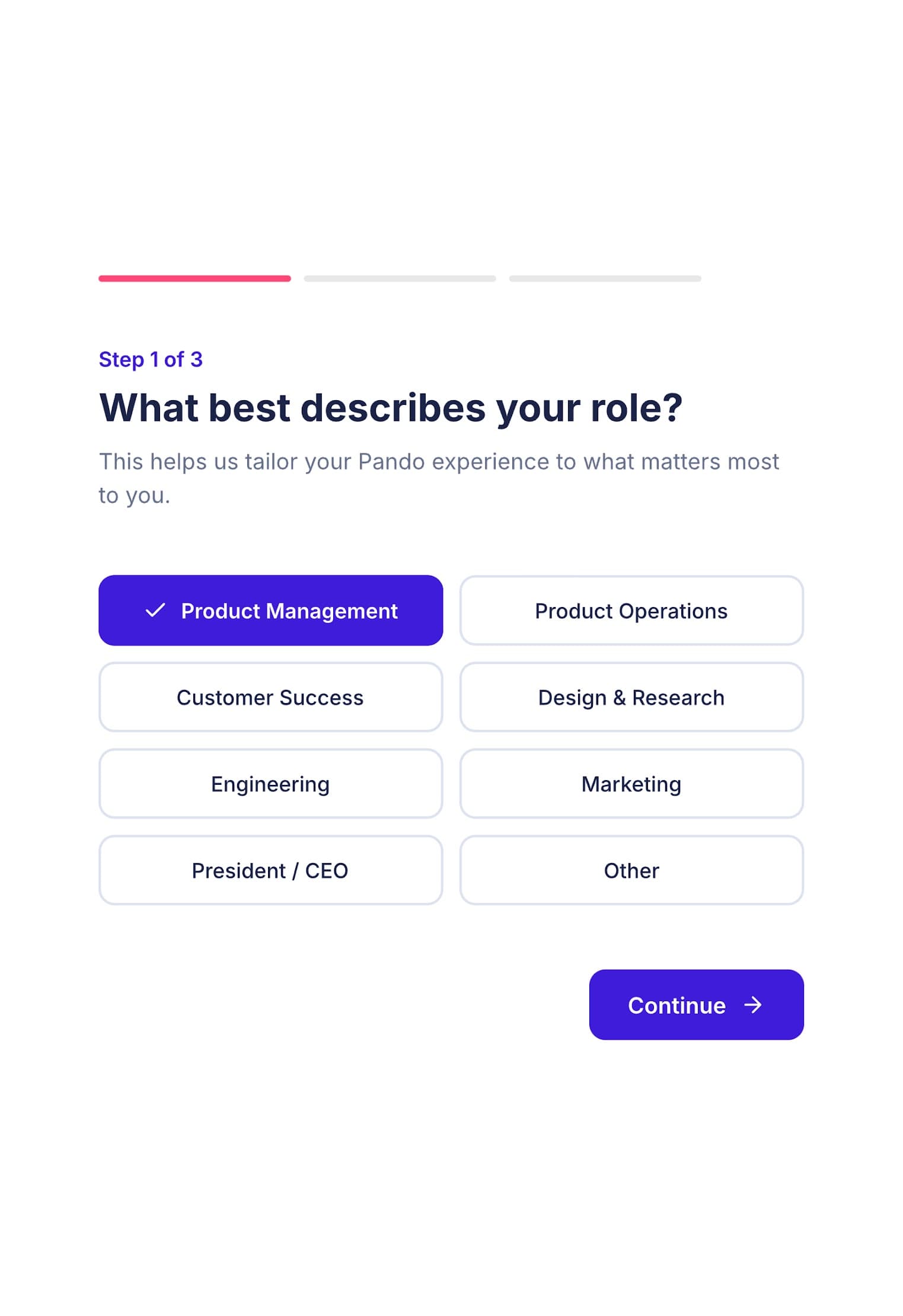
During the onboarding project, I quickly identified several key steps that Technical Support and Account Leads were manually handling, such as installation, training, and building value within the product. I worked through wireframes to productise this journey, ensuring a more seamless experience as seen above.

Identify key gaps and missed opportunities in the Pendo Free journey while measuring their business impact.
The Soloution
What I delivered
Over the course of 9-months, I delivered several key projects, including improvements to team permission workflows, installation, support chatbots, and getting started templates. While I can’t break down each one, I’m excited to share three pivotal projects that made a significant impact.
1. Onboarding
I design improved ways to download documentation and streamlined installation steps within the UI, enabling users to set up faster and more efficiently.
Since we worked with mid-sized businesses, we also developed detailed documentation focused on security and GDPR compliance to address their specific needs.
After the new onboarding launch, conversion rates significantly improved, with 14% to 16% more users progressing from signup to conversion.

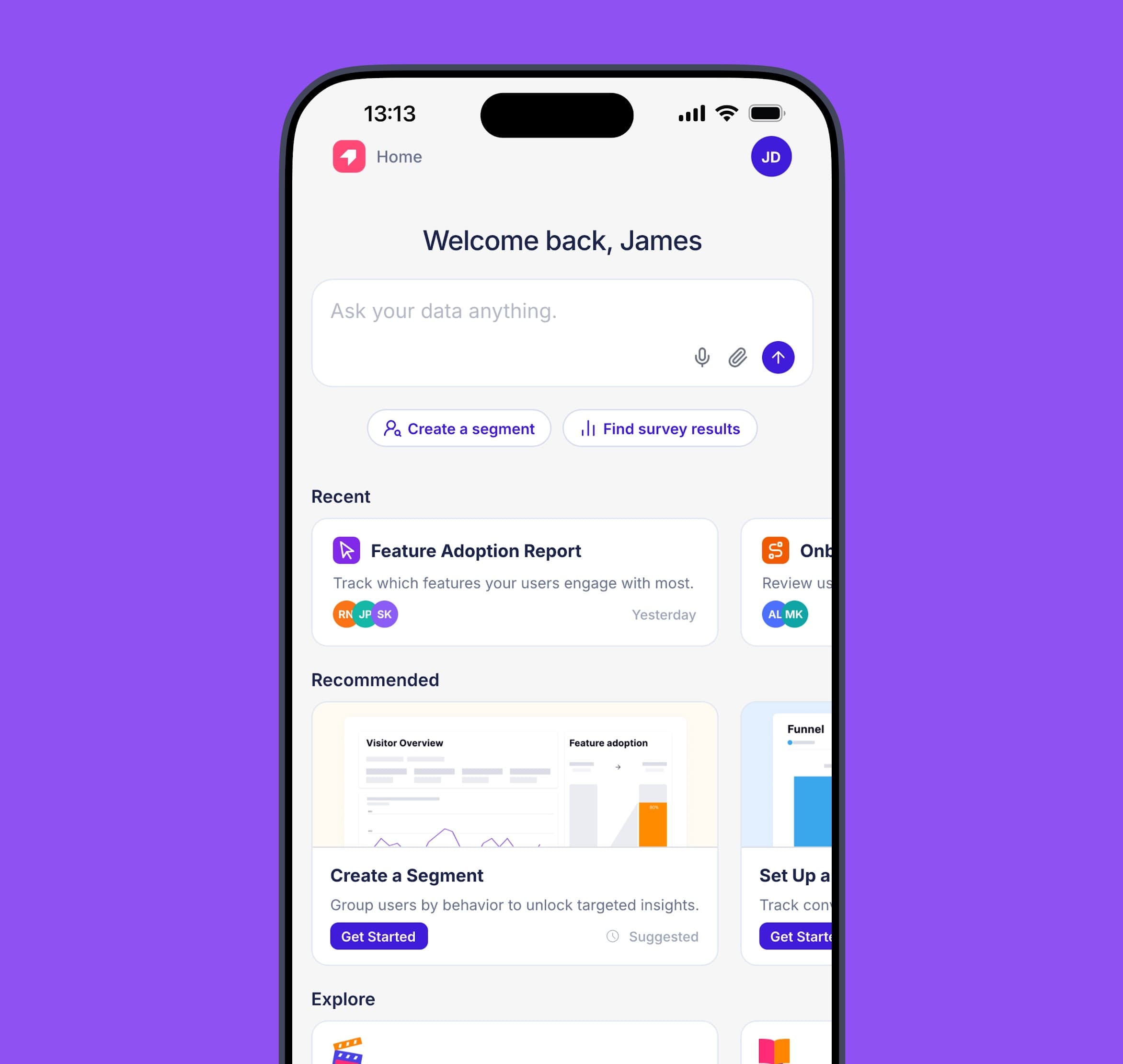
2. A New Homepage
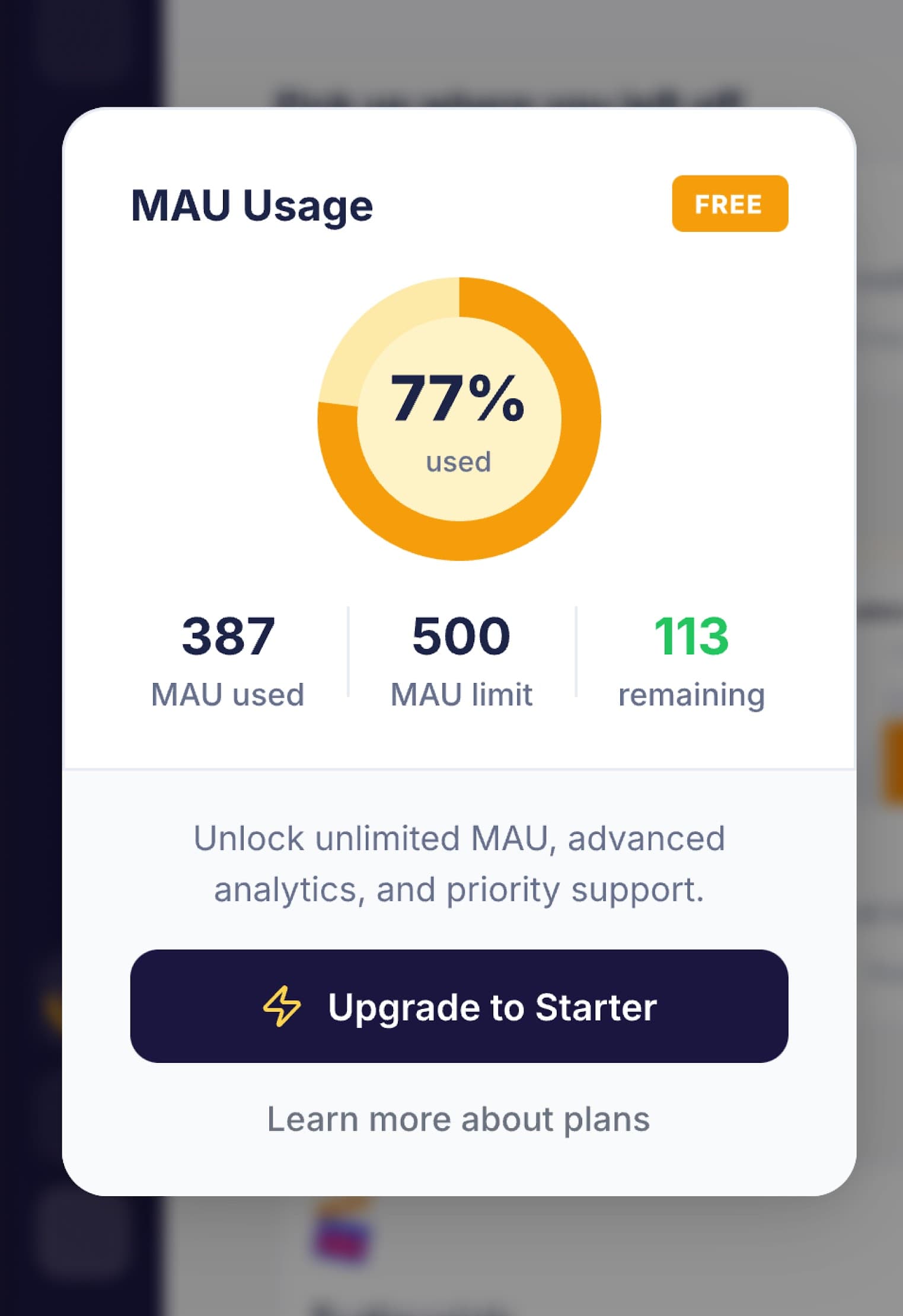
I designed a widget that allowed users to track their MAU usage, monitor their remaining allowance and navigate their upgrade options.
Additionally, we created a catalog of "Next Right Steps"—card widgets, guided feature bundles that helped users explore Pendo’s capabilities, such as running your first funnel reports.
The most popular feature on the homepage was the "Recents" and "Favourites" sections, which allowed users to easily return to the pages they used most. The homepage was a great success, achieving a 42% adoption rate, with users frequently returning to the home page to find their saved content.

3. Pricing & Packaging
We faced the challenge of structuring Pendo’s plans by module and feature—striking a balance between providing high value at each tier while creating strong upgrade incentives. Ultimately, we launched a new upgrade page that helps users view their plans and understand their upgrade options.
Overall, over 27,000 users signed up within the first 12 months of Pendo Free, driving a significant downstream impact—boosting deal influence from 4% to 45% by the end of 2023.

Next steps
- Continue releasing PLG features, including further integration of paywalls within modules.
- Evangelise PLG across R&D teams through presentations, training and playbooks.
- Expand PLG design components, focusing on upgrade paths, MAU usage patterns and unlocking additional utility features like search and global create actions on the homepage.

Learnings
Some PLG projects lacked full buy-in across the product organisation—such as our Paywalls project, which was crucial for accelerating upgrade rollouts. To drive alignment, I worked closely with other designers to normalise PLG concepts and integrate them more seamlessly into our workflow.
Additionally, the development cycle moved slower than expected. While the team aimed for speed, I wish I had taken more initiative in identifying and removing blockers. For example, nearly all design patterns and components required submission to our design system team, which added delays.
Lastly, PLG’s ethos of testing, iterating, measuring and moving fast made me realise I could have adjusted my discovery process to align better with this approach. I learned that I could push back on scope, simplify design complexity and leverage existing patterns to streamline execution.